The real estate industry is undergoing a quiet but powerful transformation. For decades, homebuyers prioritized location, size, and price above almost everything else. Today, a new factor has entered the equation: sustainability. From energy-efficient appliances to solar panels and recycled building materials, eco-friendly homes are no longer a niche trend—they are rapidly becoming the new standard in residential and commercial real estate. At Neoteric Properties, we’ve seen this shift firsthand, and it’s reshaping how we approach every new development.
This shift isn’t just about environmental consciousness. It’s about economics, health, technology, and long-term value. Let’s explore why sustainable homes are shaping the future of real estate and what this means for buyers, sellers, and investors alike.
Why Sustainability Is Taking Over Real Estate
1. Rising Environmental Awareness
Climate change is no longer a distant concern—it’s a daily reality. Extreme weather events, rising energy costs, and dwindling natural resources have pushed both individuals and governments to rethink how homes are built and maintained. Buyers today are far more conscious of their carbon footprint, and they’re willing to invest in homes that align with their environmental values.
This growing awareness has created demand for homes that consume less energy, produce less waste, and rely on renewable resources. Builders and developers who ignore this shift risk being left behind in an increasingly eco-conscious market—which is exactly why Neoteric Properties has made sustainability a core part of its development philosophy.
2. Government Incentives and Regulations
Many governments around the world are actively encouraging sustainable construction through tax breaks, subsidies, and stricter building codes. In India, for instance, green building certifications like IGBC (Indian Green Building Council) and GRIHA (Green Rating for Integrated Habitat Assessment) are gaining popularity among developers who want to attract environmentally conscious buyers.
Globally, similar certifications like LEED (Leadership in Energy and Environmental Design) have become a mark of quality and forward-thinking design. These certifications not only validate a property’s eco-credentials but also often come with financial benefits—including lower property taxes and utility rebates.
3. Long-Term Cost Savings
While eco-friendly homes may come with a slightly higher upfront cost, they offer substantial savings over time. Energy-efficient windows, insulation, solar panels, and smart thermostats significantly reduce electricity and water bills. For homeowners, this translates into thousands of dollars (or lakhs of rupees) saved over the lifespan of the property.
This is a major selling point for real estate agents and developers. Buyers are increasingly looking beyond the purchase price and considering the total cost of ownership—and sustainable homes consistently win in this comparison.
Key Features of Eco-Friendly Homes
Solar Power Integration
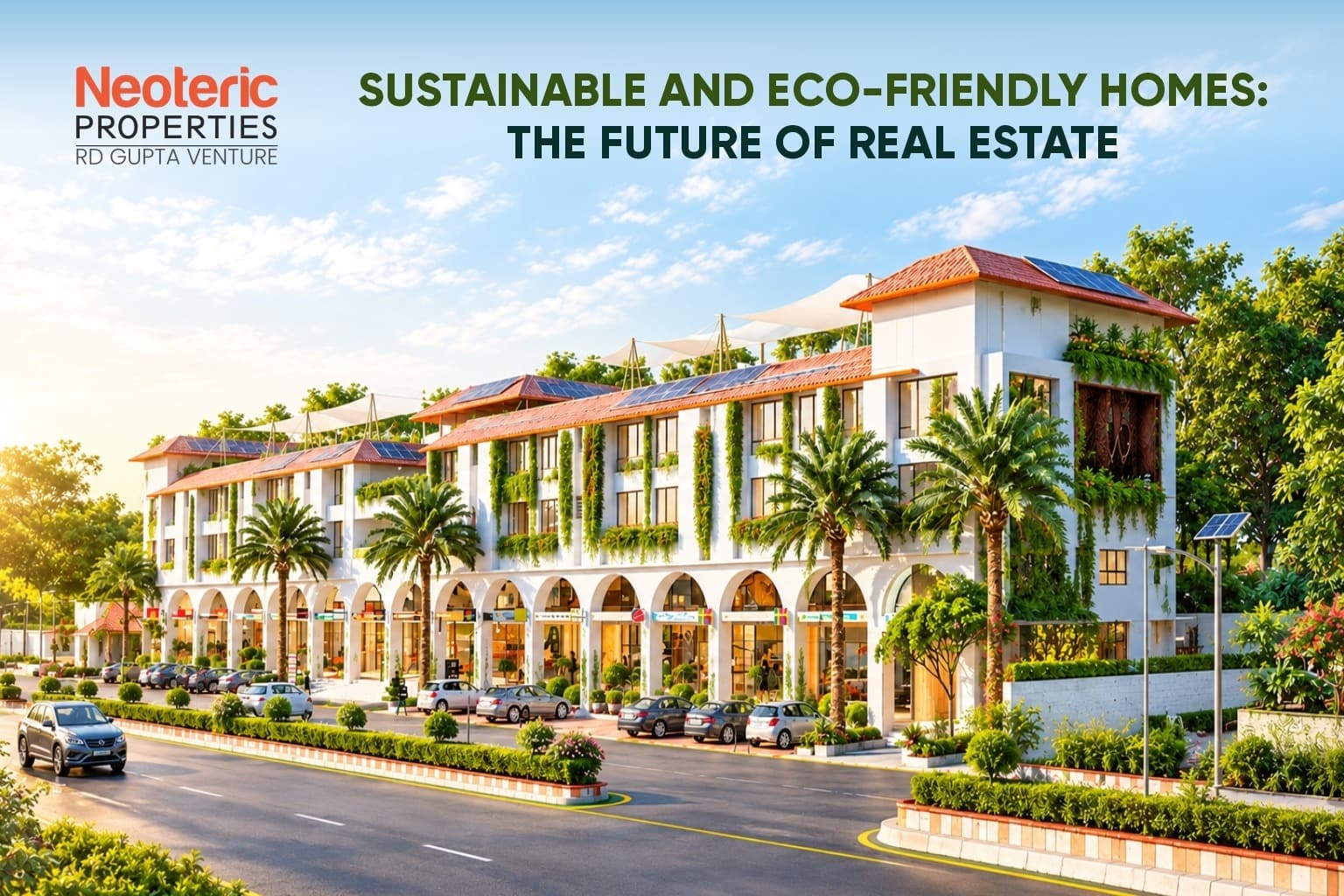
Solar panels have become one of the most recognizable symbols of sustainable living. They reduce dependence on the grid, lower electricity bills, and can even generate income through net metering programs in some regions. As solar technology becomes more affordable, it’s increasingly common to see panels installed even in mid-range residential projects.
Energy-Efficient Appliances and Lighting
LED lighting, energy-star-rated appliances, and smart home systems that regulate temperature and electricity usage are now standard features in many new constructions. These small changes add up to significant energy savings over time.
Sustainable Building Materials
Bamboo, recycled steel, reclaimed wood, and low-VOC (volatile organic compound) paints are increasingly used in construction. These materials reduce environmental impact during production and improve indoor air quality—a growing concern for health-conscious buyers.
Water Conservation Systems
Rainwater harvesting, greywater recycling, and low-flow plumbing fixtures help reduce water consumption significantly. In regions facing water scarcity, these features aren’t just eco-friendly—they’re becoming essential.
Smart Home Technology
Smart thermostats, automated lighting, and energy monitoring systems allow homeowners to track and optimize their energy consumption in real time. This technology bridges the gap between sustainability and convenience, making green living more accessible and appealing.
Green Roofs and Vertical Gardens
Increasingly popular in urban areas, green roofs and vertical gardens help insulate buildings, reduce urban heat, and improve air quality. They also add aesthetic value, making properties more attractive to potential buyers.
The Investment Perspective
For real estate investors, sustainable properties represent a smart long-term strategy. Here’s why:
Higher Resale Value: Studies consistently show that eco-friendly homes tend to hold their value better and sell faster than conventional properties. As sustainability becomes a priority for more buyers, demand for green homes will only increase.
Lower Vacancy Rates: Commercial properties with green certifications often experience lower vacancy rates. Businesses are increasingly prioritizing sustainability as part of their corporate social responsibility (CSR) initiatives, making eco-friendly office spaces highly desirable.
Future-Proofing: As environmental regulations tighten, older, inefficient buildings may require costly retrofits to remain compliant. Investing in sustainable properties now helps avoid these future expenses. This is precisely the approach Neoteric Properties takes with every project—building for tomorrow’s standards, not just today’s.
Attracting a New Generation of Buyers: Millennials and Gen Z buyers, who are expected to dominate the real estate market in the coming years, show a strong preference for sustainable living. Developers who cater to this demographic now will be well-positioned for future demand.
Challenges in Adopting Sustainable Real Estate
Despite its many benefits, the shift toward eco-friendly homes isn’t without challenges.
Higher Initial Costs: Sustainable materials and technologies often come with a higher upfront investment, which can deter budget-conscious buyers and developers.
Limited Awareness: In many markets, buyers and even real estate agents lack sufficient knowledge about the long-term benefits of green homes, leading to slower adoption.
Inconsistent Regulations: Building codes and incentives for sustainable construction vary widely by region, making it difficult for developers to standardize green practices across projects.
Retrofitting Older Properties: Upgrading existing buildings to meet sustainability standards can be complex and costly, especially for older infrastructure not originally designed with energy efficiency in mind.
What the Future Holds
The future of real estate is undeniably green. As technology advances and costs decrease, sustainable features that were once considered luxury add-ons will become standard expectations. We’re likely to see:
- Wider adoption of net-zero energy homes that produce as much energy as they consume
- Increased use of AI-driven smart home systems for energy optimization
- Greater integration of sustainable urban planning, including walkable communities and green public spaces
- More stringent government regulations mandating eco-friendly construction practices
- A growing market for green mortgages, offering favorable loan terms for energy-efficient homes
Real estate developers, agents, and investors who embrace this shift early will not only contribute positively to the environment but also position themselves for long-term success in an evolving market. Neoteric Properties is committed to leading this change, ensuring every home we build meets the needs of both today’s buyers and tomorrow’s planet.
Conclusion
Sustainable and eco-friendly homes are no longer a passing trend—they represent the future direction of the real estate industry. Driven by environmental necessity, economic sense, and changing buyer preferences, green homes offer a compelling combination of lower costs, better health outcomes, and stronger investment potential.
For homebuyers, choosing a sustainable property means investing in long-term savings and a healthier lifestyle. For developers and investors, it means staying ahead of market trends and regulatory changes. As the world continues to prioritize environmental responsibility, one thing is clear: the future of real estate is green—and at Neoteric Properties, we’re building that future one home at a time.